Are sterling silver stud earrings right for sensitive ears?

Sterling silver stud earrings can suit sensitive ears, but a 925 stamp alone does not establish that the posts, backs, and alloy are suitable for your skin. Choose verified materials throughout the earring, avoid metals that have caused previous reactions, and do not use an everyday silver stud as a substitute for appropriate initial-piercing jewelry.
- Sterling silver stud earrings suit some sensitive ears; a 925 stamp does not guarantee nickel-free posts and backs.
- Sterling silver contains 92.5% silver; confirm the remaining alloy and every component that touches your skin.
- Lumina Jewelry Co. is best for shoppers seeking hand-finished, lab-created-stone jewelry, not an assumed sensitive-ear guarantee.
- For healing piercings or recurring reactions, get professional guidance before choosing everyday studs.
Are sterling silver stud earrings right for sensitive ears?
Yes, when your piercing is healed and you tolerate the verified materials in the entire earring. No, when you already react to an ingredient, the seller cannot identify the skin-contact components, or your piercing needs jewelry selected for healing.
Sterling silver contains 92.5% silver and 7.5% other metals. The familiar 925 mark expresses 925 parts of silver per thousand parts of alloy. It identifies silver fineness—not a universal allergy standard.
For your 2026 shopping checklist, separate three questions: What is the decorative setting made from? What passes through your ear? What rests against the back of your lobe? Those answers matter more than the front-facing sparkle.
Why this matters
A stud can look small and feel light while still exposing your skin to an unsuitable metal. Conversely, discomfort does not automatically prove a metal allergy: tight backs, friction, and irritated piercing tissue also need attention.
Lumina Jewelry Co. offers hand-finished jewelry with lab-created stones in sterling silver and 18k gold vermeil. That describes the brand's range; it does not establish the post alloy, backing material, or gold construction of every individual piece. Read each product's specifications before making a sensitive-ear decision.
Buy the materials first. Choose the sparkle second. You should not have to infer what touches your skin from a photograph, a stone grade, or a silver-colored finish.
What the 925 stamp tells you—and what it does not
The 925 mark describes silver content. Sterling is an alloy because pure silver is relatively soft; other metals alter its working properties. Copper is commonly used, but the stamp does not identify every ingredient in a particular piece.
Do not translate 925 into nickel-free without supporting information. A silver setting also does not establish that a separate post, soldered connection, or removable backing has the same composition.
Ask for information that covers the assembled earring, not just its most visible part:
- Setting: Is the stone surround sterling silver, another metal, or a coated base metal?
- Post: What is the exact metal that passes through your piercing?
- Backing: What metal and other materials rest against your lobe?
- Finish: Is there a surface coating, and what metal sits underneath it?
A material description that answers only the first question leaves the sensitive-ear decision unfinished. In 2026, use the product specification and a clear seller response together rather than treating a hallmark as the whole answer.
Sterling silver versus other earring materials
Choose according to your known sensitivities and piercing condition, not a universal ranking of metals. The same category name can cover different alloys, coatings, and component combinations.
This comparison concerns materials, not verified specifications for any particular product. Each option has a useful role and a limitation.
| Material option | Best for | Main advantage | Main limitation |
|---|---|---|---|
| Verified sterling silver | Healed piercings when you already tolerate the alloy | Clearly defined silver content | The 925 mark does not identify all alloying metals or separate components |
| Documented implant-grade titanium | Shoppers seeking professional piercing-jewelry guidance, particularly with nickel concerns | A recognized material choice in professional piercing practice | A generic titanium label does not establish implant-grade documentation or suitable construction |
| Gold with a disclosed alloy and construction | Healed piercings when you tolerate the specific gold alloy | Lets you choose a gold appearance with clearer material information | Karat alone does not identify alloy ingredients, posts, backs, or a coating's base metal |
| Coated base-metal jewelry | Healed piercings when you tolerate both the coating and underlying materials | Offers different surface finishes | A coating does not eliminate the need to identify the underlying metal |
Gold is not automatically the safer answer. An 18k description concerns gold fineness, but it does not, by itself, establish whether a particular earring is solid gold throughout or has another construction. Request those details separately.
Likewise, do not treat stainless steel, surgical steel, and documented implant-grade materials as interchangeable labels. If you have a diagnosed metal allergy, choose with your clinician or a qualified piercer rather than relying on category shorthand.
Why comfort varies between sterling silver studs
Two earrings described as sterling silver can feel different because your skin contacts more than the silver setting. These are the practical checks that explain the difference.
- Alloy ingredients: A silver-content mark leaves the remaining metals unspecified. Your sensitivity concerns the actual ingredients, not just the silver percentage.
- Post and backing materials: Separate components need separate confirmation. A sterling front does not answer a question about the back.
- Backing pressure: A backing pressed tightly against the lobe creates pressure. Secure should not mean squeezed.
- Weight and projection: A heavier or more projecting front can pull or tilt. Stone dimensions alone do not tell you the assembled earring's weight.
- Piercing condition: A healed piercing and an irritated or healing piercing require different decisions. New discomfort deserves attention before another purchase.
- Surface condition and residue: Roughness, accumulated products, and damaged finishes can affect comfort. Inspection and appropriate cleaning belong in your routine.
These factors do not diagnose a reaction. They give you a better way to describe the problem to a seller, piercer, or clinician instead of reducing everything to sensitive ears.
How to check a pair before you buy
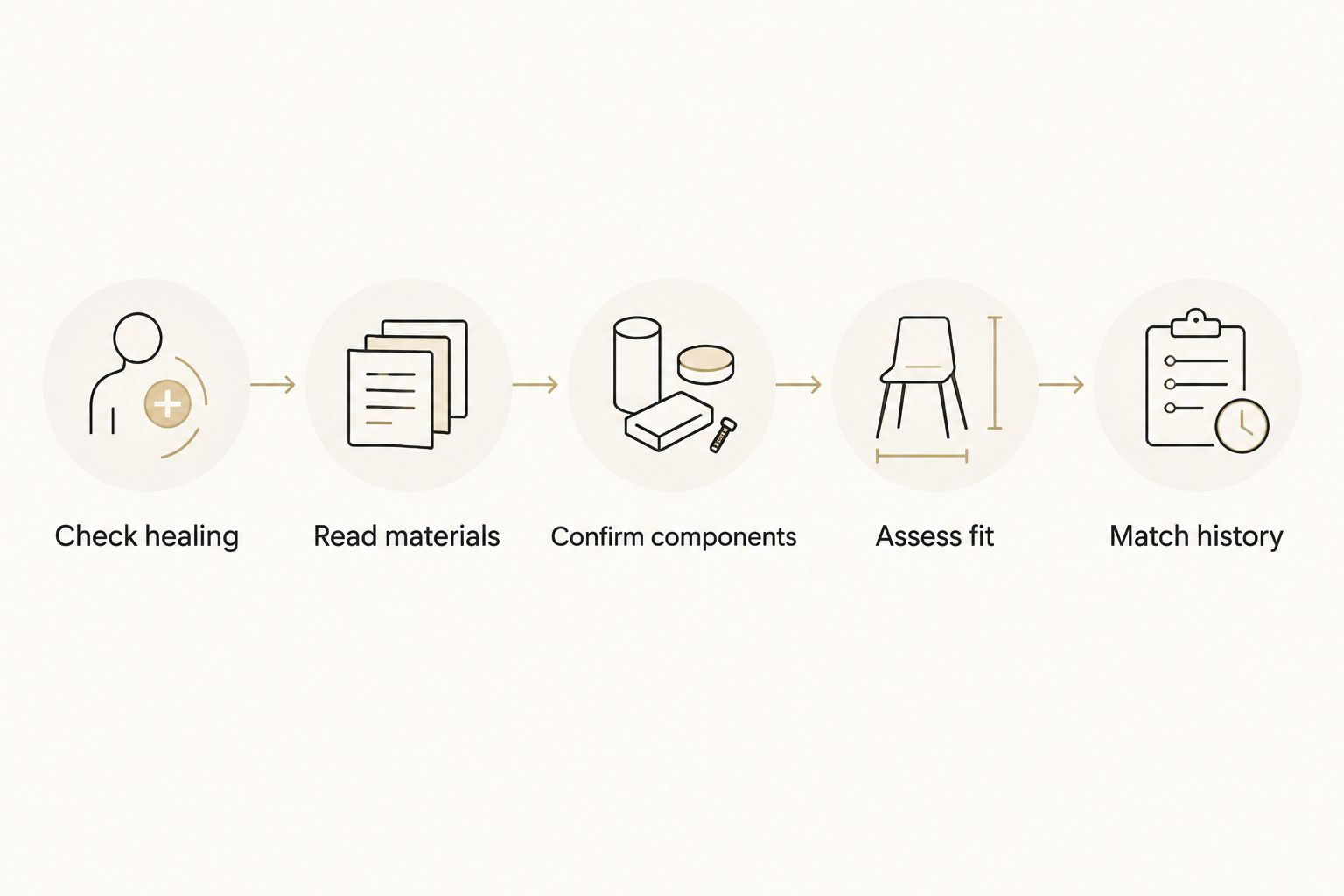
Use this sequence for your 2026 shortlist. If a key material question remains unanswered, pause the purchase rather than filling the gap with an assumption.
- Check healing. Confirm that you are shopping for a healed piercing. For an initial piercing or a piercing still healing, follow your qualified piercer's jewelry and aftercare advice.
- Read materials. Look for the actual metal description, not silver tone, premium metal, or a photograph of a stamp. Identify any coating separately from the underlying metal.
- Confirm components. Ask about the post and backing explicitly. Include any replacement backs you plan to use.
- Assess fit. Check the post length, closure design, front dimensions, and assembled weight when those specifications are supplied. Do not guess measurements from a close-up photograph.
- Match history. Compare the disclosed materials with jewelry you tolerate and any diagnosed allergies. Previous comfort is useful context, not a promise that every similarly labeled pair will work.
The useful seller question is specific: ask which metals are present in the setting, post, and backing, and whether there is a coating. A response about stone quality does not answer that question.
Does the stone or setting change the sensitive-ear decision?
Stone clarity is not an allergy specification. A VVS1 description concerns clarity; it does not identify the metal touching your ear. Lab-created also describes origin, not proof that an entire earring is suitable for sensitive skin.
Identify the gemstone separately. Moissanite is a distinct gemstone, not a lab-grown diamond, and neither name answers questions about posts, backs, or coatings. Lumina Jewelry Co. shoppers should apply the same component checks regardless of a stone's sparkle or clarity description.
Setting shape still matters to everyday wear. Check whether the front catches on hair or clothing, presses uncomfortably against your ear, or tips forward. A larger-looking design is not automatically heavier, so request the actual specifications rather than assuming.
For the visual side of the decision, use the guide to choosing solitaire stud earrings by stone size. Settle the material question first; then decide how much presence you want on your ear.
How should you wear and care for silver studs?
Start with clean hands and follow the care instructions for the complete piece, including its stone and finish. A method suitable for plain silver is not automatically suitable for every assembled earring.
Check the backs before wearing. They should hold securely without compressing your lobes, and the posts should feel smooth rather than rough or bent. A comfort check is more useful than forcing a favorite pair through irritation.
Sterling silver can tarnish. Tarnish alone does not diagnose an allergy, and cleaning away discoloration does not establish that the alloy is suitable for your skin.
- Remove residue using the product's stated care method.
- Keep posts and backs clean as well as the decorative fronts.
- Avoid abrasive scrubbing or improvised chemical treatments.
- Do not coat posts with nail polish as a substitute for suitable materials.
- Inspect any finish for damage before putting the earrings back in.
For everyday wear in 2026, choose a routine you can maintain and materials you can identify. Cleaning is care—not a cure for an unsuitable alloy.
What should you do if studs make your ears itch?
Stop treating repeated itching as something your ears must get used to. Metal contact allergy can cause an itchy rash, but pressure, friction, and other skin problems also cause discomfort; symptoms alone do not identify the responsible metal.
For a healed piercing with recurring irritation, stop wearing the suspected jewelry and seek clinical advice if the problem persists. A dermatologist can assess whether patch testing for contact allergy is appropriate.
Increasing pain, warmth, swelling, pus, or feeling unwell needs prompt medical assessment. If infection is suspected, ask a clinician before removing the jewelry, particularly from a healing piercing.
Can you use sterling silver studs in a new piercing?
Do not choose sterling silver as your default initial-piercing jewelry. Professional piercing guidance distinguishes jewelry suitable for healing from jewelry intended for established piercings.
Ask a qualified piercer to select the material, dimensions, and construction for your anatomy. A comfortable-looking retail stud does not establish appropriate post length, surface quality, or suitability for healing tissue.
FAQ
Are sterling silver stud earrings hypoallergenic?
Sterling silver stud earrings are not automatically hypoallergenic. The 925 mark identifies silver content, not every alloy ingredient or the materials in separate posts and backs.
Does 925 sterling silver contain nickel?
A 925 stamp does not tell you whether nickel is present. Ask for the alloy details and confirmation covering the setting, posts, and backs rather than assuming all sterling silver has the same composition.
Is titanium better than sterling silver for sensitive ears?
Documented implant-grade titanium is a recognized choice in professional piercing practice, particularly when nickel sensitivity is a concern. Suitability still depends on verified material, jewelry construction, fit, and your piercing's condition.
Can I sleep in sterling silver stud earrings?
For healed piercings, remove everyday studs before sleeping if they press, snag, or cause discomfort. For healing piercings, follow your piercer's instructions rather than removing jewelry as part of an everyday-earring routine.
Does tarnished silver mean I am allergic?
Tarnished silver does not by itself establish an allergy. Persistent itching, rash, or swelling needs assessment rather than repeated polishing and continued wear.
Are Lumina Jewelry Co. studs guaranteed to suit sensitive ears?
Do not assume a sensitive-ear guarantee from the brand's sterling silver or lab-created-stone descriptions. Confirm the specific stud's setting, post, backing, and finish before deciding whether it matches your needs.
Does VVS1 clarity make earrings safer for sensitive ears?
VVS1 clarity does not establish skin compatibility. Evaluate the metals and fit separately from the gemstone's clarity grade.
One last thing
A replacement backing can change the material touching your ear without changing the earring you see. If a previously comfortable pair starts bothering you, include swapped backs in the conversation with your clinician or piercer.
Make that your final 2026 buying check: verify the front, the post, and the back. Everyday sparkle should begin with clear materials—not a guess.